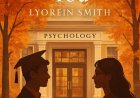
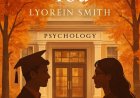
Chapter 1:The First Lecture
Ananya and James meet during their first lecture at Stanford, igniting the beginning of their story.

The air in Palo Alto was different. It wasn’t just the impossible, uniform blue of the sky, a shade so pure it felt like a special effect, nor was it the dry, cinematic warmth that settled on the skin, a world away from the humid, monsoon-thick air of Delhi she had left behind only seventy-two hours ago. It was the scent of the place: a clean, almost sterile perfume of eucalyptus, sun-baked stone, and the distant, manicured scent of sprinklers working tirelessly to keep the sprawling lawns an aggressive shade of green. For Ananya Sharma, it smelled overwhelmingly of newness, a potent cocktail of opportunity and a terrifying, gut-wrenching loneliness.
She clutched the strap of her satchel, the worn leather a familiar comfort against the crisp, unfamiliar fabric of her new cotton blouse. Her fingers traced the embossed campus map, the paper already growing soft and creased at the edges from her constant, anxious consultation. Building 200, Room 105. It sounded simple enough when the orientation guide, a perky blonde girl named Tiffany with a blindingly white smile, had pointed it out. But now, standing in the center of Stanford’s Main Quad, Ananya felt like a single, misplaced character in a grand, sprawling alphabet she didn’t know how to read.
The scale of it was obscene. Arches opened into more arches, leading into colonnades that stretched into what seemed like infinity, all carved from a warm, honey-colored sandstone that glowed under the morning sun. It wasn’t just a university; it was a testament, a palace built to the gods of knowledge and ambition. Back home, her college was a respected institution, a cluster of sturdy, Brutalist buildings that valued function over form. This was different. This place was designed to make you feel small, to remind you that you were now part of something immense, something with history and a terrifyingly high bar for success. The weight of her parents’ pride, of her entire extended family’s pooled hopes, felt heavier here, under the shade of the red-tiled roofs and whispering palm trees.
“You are our California girl now,” her father had said, his voice thick with emotion during their final video call. “Show them what a girl from Delhi can do.”
The memory sent a fresh wave of determination through her, stiffening her spine. She wasn’t here to be intimidated. She was here to learn, to excel, to absorb everything this place had to offer and build a life her parents could only have dreamed of. She took a deep breath, squared her shoulders, and marched toward Building 200 with renewed purpose.
The lecture hall was exactly as she’d pictured from the movies: steeply tiered rows of wooden seats curving around a central lectern, all facing a chalkboard that spanned the entire front wall. The air buzzed with the low hum of a hundred different conversations, a tapestry of American accents punctuated by snippets of other languages. She saw faces from every corner of the world, a vibrant, chaotic mosaic of humanity. For a moment, the loneliness receded, replaced by a flicker of belonging. She wasn't the only one who had traveled thousands of miles, crossing oceans and time zones to be here.
She found an empty seat in the middle section, about ten rows up. It offered a perfect, unobstructed view of the front. Methodically, she unpacked her bag, her movements precise and calming. A freshly sharpened pencil, a blue ink pen, and a crisp, new notebook, its pages pristine and full of promise. She wrote the course title on the first page in her neat, careful cursive: CC-101: Cross-Cultural Narratives.
Her heart gave a little skip. This was it. This was the class she had dreamed of, the reason she’d chosen a liberal arts focus alongside her computer science major. A class that promised to deconstruct the very stories that shape us, the myths we inherit and the new ones we create when we are unmoored from our origins.
A few minutes before the lecture was due to start, a figure slid into the empty seat to her right. She didn’t look up, too focused on re-reading the syllabus she’d printed out, but she was aware of a presence, a subtle shift in the air beside her. The scent of rain-soaked earth and something faintly like Earl Grey tea, a stark contrast to the saccharine fruity body sprays that seemed to be the local preference.
Then, a voice, quiet and with a clipped, melodic accent that was unmistakably British, cut through her concentration.
“Pardon me, did you catch the professor’s name? I seem to have misplaced my schedule. A rather brilliant start to the term, wouldn't you say?”
Ananya finally looked up, and her carefully constructed wall of academic focus wavered. He was… rumpled. His dark brown hair fell across his forehead in a way that suggested he’d run his hands through it a dozen times already that morning. He had a light smattering of freckles across his nose, and his eyes, a startlingly clear shade of green, held a glimmer of wry amusement, as if he were perpetually in on a private joke. He was wearing a simple grey t-shirt and jeans, but he wore them with an air of casual indifference that she, in her meticulously chosen "first day of school" outfit, found both irritating and intriguing.
“Professor Finch,” she said, her voice coming out a little more formal than she’d intended. “Alistair Finch.”
“Finch,” he repeated, a slow smile spreading across his lips. “Sounds like a character from a Dickens novel. Allistair Finch. Let’s hope he’s more of a cheerful Pickwick than a dour Gradgrind.”
Ananya offered a small, hesitant smile in return. She had no idea who Pickwick or Gradgrind were, and the gap in her knowledge stung. She’d spent the entire summer devouring the Western literary canon, trying to prepare for moments exactly like this, but Dickens had been a formidable mountain she hadn’t fully scaled.
“I wouldn’t know,” she admitted, a flush of embarrassment warming her cheeks.
He didn’t seem to notice her discomfort, or if he did, he was kind enough to ignore it. He simply nodded, his gaze sweeping over the bustling lecture hall. “Well, here’s hoping for the best. I’m James, by the way.”
“Ananya,” she replied, the name feeling foreign on her own tongue in this new context.
“Ananya,” he repeated, testing the syllables. He pronounced it correctly, a small miracle she was already learning not to take for granted. “That’s a beautiful name. Where are you from?”
“Delhi. India.”
“Ah, London,” he offered, as if it were an equal trade. “So we’re the international contingent, then. Come to see how the colonials are getting on.”
His grin was infectious, and despite herself, Ananya felt the tension in her shoulders ease slightly. There was a self-deprecating humor to him that was disarming. He wasn’t arrogant, she realized, just… relaxed. At ease in his own skin in a way she deeply envied.
Before she could respond, the lights in the hall dimmed slightly, and a man strode to the lectern at the front. He was tall and impossibly thin, with a shock of white hair that stood in stark contrast to his severe black suit. This had to be Professor Finch. He surveyed the room with an intense, unblinking stare, waiting for the chatter to die down. The silence that fell was absolute.
“Welcome,” Professor Finch began, his voice a low, resonant baritone that filled every corner of the room. “To Cross-Cultural Narratives. If you are here because you thought this would be an easy A, a charming tour of global folklore, you are in the wrong place. The stories we will be dissecting in this room are not quaint artifacts. They are living, breathing organisms. They are the architecture of our identities, the software of our souls. They are also, very often, weapons.”
He paused, letting the weight of his words settle. Ananya leaned forward, completely captivated. Beside her, she heard James let out a low, soft whistle.
“We will explore how a story born in one culture is received, rejected, or re-imagined in another,” Finch continued, his eyes sweeping across the students. “We will ask ourselves: what happens when a narrative crosses a border? Does it act as a bridge, or as a bomb? When you, a person from one world, enter another, what story do you tell about yourself? And more importantly, what story does your new world tell about you?”
Ananya felt a shiver run down her spine. It was as if he were speaking directly to her, articulating the very questions that had been swirling in her own mind. She glanced at James, and to her surprise, he was already looking at her. The earlier amusement in his eyes was gone, replaced by a look of genuine thoughtfulness. He gave her a small, almost imperceptible nod, a silent acknowledgment that they were both, in this moment, the living embodiment of the professor’s lecture.
For the next hour, Ananya was lost. Professor Finch spoke without notes, weaving together threads from post-colonial theory, ancient mythology, and contemporary film. He spoke of the ‘third space,’ the liminal state of the immigrant who belongs to two worlds and to none. He talked about the power of language not just to describe reality, but to create it. Ananya’s pen flew across the page, her mind racing to keep up. This wasn’t just a class; it was an explanation. It was a framework for understanding the dizzying dislocation she was feeling.
For his part, James was equally enthralled, though his approach was different. He didn't take a single note. Instead, he leaned back in his chair, his arms crossed, simply listening. He absorbed the lecture not as a series of facts to be memorized, but as a single, complex idea to be contemplated. He’d come to Stanford to escape the well-trodden paths of Oxford or Cambridge, to find a different way of thinking, and in Professor Finch’s provocative opening salvo, he felt he had come to the right place.
His gaze kept drifting back to the girl beside him. Ananya. He watched the fierce concentration on her face, the way her dark hair fell across her cheek as she wrote, the almost desperate intensity in her focus. She wasn’t just a student in a lecture; she was a seeker, a pilgrim. He saw the subtle glint of a small, delicate nose ring, a tiny spark of tradition in this temple of modernity. He wondered about the world she came from, the stories she carried with her. He, who had always prided himself on his ability to read people, felt that she was a text written in a language he was only just beginning to learn. She was structured, disciplined, and radiated an ambition so potent it was almost tangible. He, by contrast, felt like a collection of loosely assembled observations, held together by curiosity and a general desire not to be bored.
When Professor Finch concluded with a final, cryptic remark about their first assigned reading—“Prepare to have your definition of a ‘hero’ fundamentally challenged”—and dismissed the class, the spell was broken. The lecture hall erupted back into noise and motion. Ananya blinked, as if emerging from a trance, her hand slightly cramped from writing.
She began to pack her things, her movements returning to their usual methodical pace. She was so immersed in her own thoughts, replaying the professor’s words, that she almost didn’t notice James speaking to her again until he was standing in the aisle, waiting for her.
“So,” he said, a ghost of his earlier grin returning. “Not a Pickwick, but definitely not a Gradgrind either. Something else entirely.”
Ananya looked up, surprised that he had waited. “He was… incredible.”
“He was terrifying,” James countered, but his eyes were bright with excitement. “In the best possible way. I have a feeling this class is going to be a proper workout for the old grey matter.”
They fell into step together, joining the river of students flowing out of the hall and back into the brilliant California sunshine. The transition was jarring, from the cool, intellectual dimness of the lecture to the overwhelming brightness of the day.
“I’m sorry if I seemed rude earlier,” Ananya said suddenly, stopping near a large oak tree as the crowd thinned. “About your Dickens reference. I haven’t read as much as I should have.” The admission felt like a confession of a deep-seated inadequacy.
James stopped too, turning to face her. He looked genuinely surprised. “Rude? Not at all. Good lord, if I had a pound for every literary reference I’ve missed from this side of the pond, I could probably pay my tuition. That’s the whole point, isn’t it? Professor Finch’s point. We’ve all got different libraries in our heads.” He gestured vaguely at the grand buildings around them. “I suppose this is where we come to swap books.”
His casual grace was a balm on her anxiety. He didn’t see her lack of knowledge as a flaw, but simply as a difference. A different library in her head. She liked that.
“I suppose so,” she said, a real smile finally reaching her eyes.
“Well, Ananya from Delhi,” he said, his own smile widening. “It was a pleasure sharing our first intellectual terror with you.”
“And you, James from London,” she replied, feeling a surprising pang of disappointment that the conversation was ending.
“I guess I’ll see you on Wednesday, then,” he said. “Ready to have our definition of a hero fundamentally challenged.”
“Yes. See you on Wednesday.”
He gave her a final, charmingly lopsided wave and turned, disappearing into the throng of students heading toward the campus bookstore. Ananya stood under the shade of the oak tree for a moment, watching him go. The air was still filled with the same scent of newness, but now, it was tinged with something else. The faint, lingering aroma of Earl Grey tea and the promise of a shared story just beginning.
She clutched her satchel, the leather warm from the sun, and started walking toward her dorm. Her mind was still buzzing with theories of narrative and identity, but a new, simpler thought had inserted itself among them.
Wednesday.
For the first time since arriving in this vast, sun-drenched, and intimidating new world, she had something to look forward to that wasn’t on a syllabus. And that, she thought, was a story worth exploring.
What's Your Reaction?
 Like
0
Like
0
 Dislike
0
Dislike
0
 Love
0
Love
0
 Funny
0
Funny
0
 Angry
0
Angry
0
 Sad
0
Sad
0
 Wow
0
Wow
0